<?xml version="1.0" encoding="utf-8"?>
<feed xmlns="http://www.w3.org/2005/Atom">
  <title>Embrayse Insights</title>
  <subtitle>Perspectives on food, nutrition, and operations in Australian aged care.</subtitle>
  <link href="https://embrayse.com/insights/feed.xml" rel="self"/>
  <link href="https://embrayse.com/insights/"/>
  <updated>2023-12-05T00:00:00Z</updated>
  <id>https://embrayse.com/insights/</id>
  <author>
    <name>Embrayse</name>
  </author>
  
  
  <entry>
    <title>Christmas Food Special: Nourishing the Soul (Not Just the Body)</title>
    <link href="https://embrayse.com/insights/christmas-food-special-nourishing-the-soul-not-just-the-body/"/>
    <updated>2023-12-05T00:00:00Z</updated>
    <id>https://embrayse.com/insights/christmas-food-special-nourishing-the-soul-not-just-the-body/</id>
    <summary>How aged care providers can foster well-being through inclusive meal practices during the festive season.</summary>
    <content type="html"><![CDATA[<p>The overwhelming majority of aged care homes in Australia celebrate Christmas, and this is a great thing.</p>
<p>Hosting Christmas luncheons for families and serving festive menu items throughout December (like Christmas puddings, eggnog, gingerbread and ham) are examples of food-related activities that can bring a huge amount of joy to residents.</p>
<p>When combined with things like Christmas carols, decorations and other celebratory events, many residents will feel like they get a full 'Christmas experience.'</p>
<p>However, for some, these activities don't reflect the lived experience of how they used to celebrate Christmas with their families.</p>
<p>For these residents, Christmas celebrations can instead lead to some sad reflections on what they miss about this special time. Such a feeling is often summed up in a statement along the lines of, &quot;This isn't Christmas to me.&quot;</p>
<p>With the festive season about to get into full swing, now is a great time to look at some practical ways aged care homes can engage with residents and families around Christmas-related food and dining experiences.</p>
<h2>The Australian context</h2>
<p>Australia is a melting pot of different cultures and backgrounds. So it's not surprising that our aged care system reflects this diversity.</p>
<p>According to data from the Australian Institute of Health and Welfare:</p>
<ul>
<li>33% of people using aged care services were born overseas.</li>
<li>19.6% of residents in aged care homes were born in a non-English speaking country.</li>
<li>12.3% of residents were born in an English speaking country other than Australia.</li>
</ul>
<p>This means that on average, residential aged care homes could count on around one third of their residents potentially celebrating Christmas in a different way (or not at all).</p>
<p>Many overseas-born aged care residents may enjoy and have even adopted Australian customs around Christmas. However, considering how intertwined food-related cultural practices are with feelings of connection and identity, the importance of inclusive meal practices during the festive season becomes apparent.</p>
<h2>Food, connection and identity</h2>
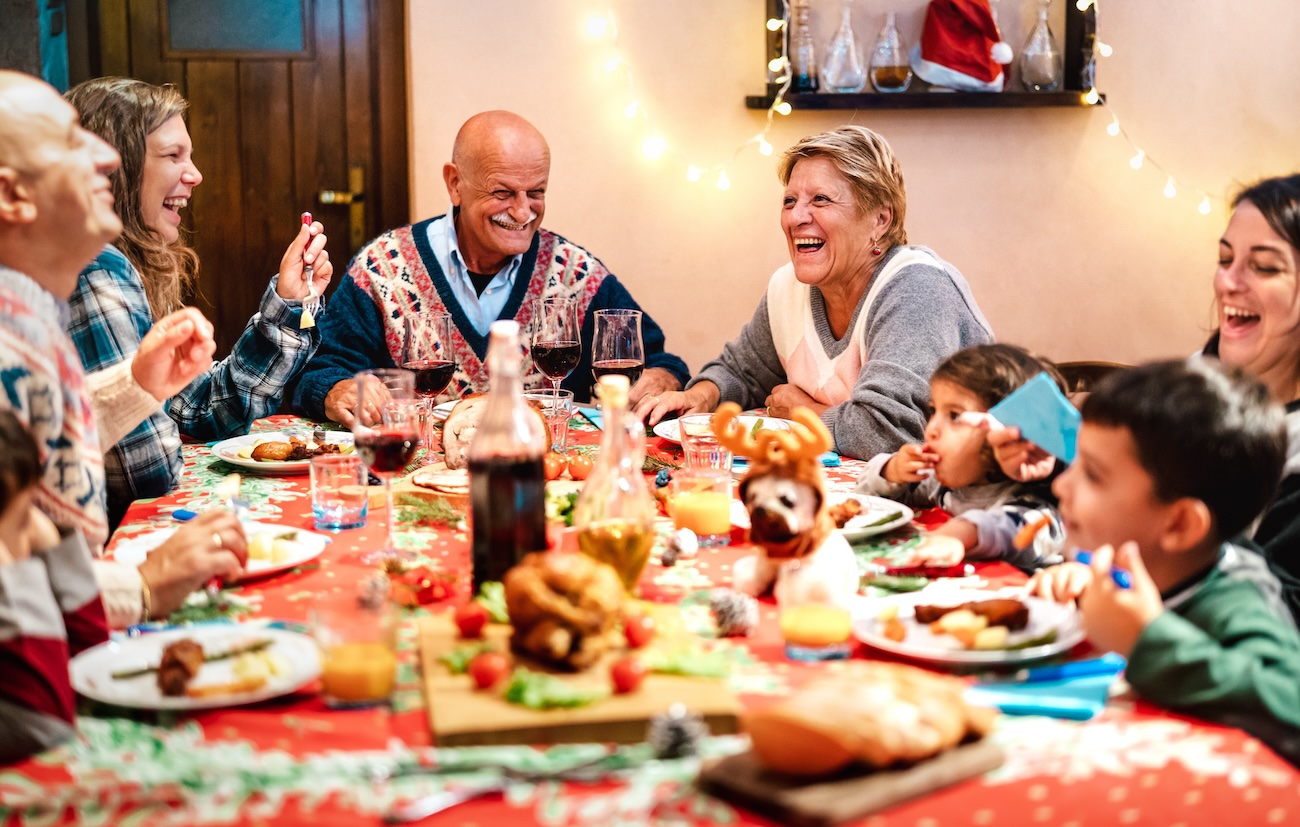
<p><img src="https://embrayse.com/insights/christmas-food-special-nourishing-the-soul-not-just-the-body/christmas-dinner.jpg" alt="A family gathered around a traditional Christmas dinner table" /></p>
<p>Across all cultures, food is used as an important source of connection with friends, loved ones, religious and cultural practices and the wider community.</p>
<p>While nutrition is undoubtedly a primary concern when it comes to meals in aged care settings, food, cooking and dining experiences are also strongly linked to social well-being.</p>
<p>Especially during significant events (such as those occurring toward the end of the year), food plays a central role in bringing people together. It also provides a sense of meaning, purpose and well-being for those involved in its preparation and hosting.</p>
<p>A few examples originating outside of Australia include:</p>
<ul>
<li><strong>Thanksgiving (late November).</strong> Modelled after a &quot;harvest feast&quot; to celebrate blessings throughout the year. Centred around sharing a meal between family and friends.</li>
<li><strong>Hanukkah (mid-December).</strong> An 8-day Jewish festival marking the overthrow of Greek occupiers by Jewish freedom fighters. Oily foods (such as traditional donuts and pancakes) and dairy are an important part of the event.</li>
<li><strong>Noche Buena (Christmas Eve).</strong> Many Latino and Filipino households throughout the world host a late dinner on 24 December, which can go throughout the night over to Christmas Day. Foods served vary according to cultural background, but tend to be large cuts of pork to feed a lot of people.</li>
</ul>
<h2>The importance of the individual experience</h2>
<p>While the events above focus largely on collective experiences, it's essential to remember the unique importance the celebration might have for the individual.</p>
<p>For example, an American resident may have taken particular pride in hosting Thanksgiving each year. A Jewish resident could derive a significant feeling of fulfilment from having prepared a specific signature dish each Hanukkah. Or, for someone from a Filipino background, sharing dinner with family on Christmas Eve may take precedence over Christmas Day.</p>
<p>Even among Australian-born residents, individual experiences of Christmas can vary widely.</p>
<p>For some, Christmas Day is a formal occasion to have a special lunch or dinner with family. For others, a morning trip to the beach followed by a low-key barbecue and relaxing afternoon represents a day well celebrated.</p>
<p>Anything aged care homes can do to support residents in continuing to participate in such practices can have a significant positive impact on overall well-being.</p>
<p>However, the obvious question that comes up is:</p>
<p><strong>With seemingly endless ways individuals incorporate food into Christmas celebrations, how can providers be more inclusive regarding residents' individual needs?</strong></p>
<h2>The golden rule of inclusivity</h2>
<p>One rule sits above all else when it comes to inclusivity: <strong>Ask. Don't assume.</strong></p>
<p>Compared to taking it upon yourself to research what festive meal options residents might appreciate, asking for direct feedback has two important benefits:</p>
<ol>
<li><strong>It identifies the practices that are most important to your residents.</strong> For some, this could be more around dining experience and time with family than food choices. For others, having access to specific foods will be the most important component.</li>
<li><strong>It makes residents and families feel seen and heard.</strong> Even if it's not possible to implement all the practices important to your residents, the simple act of asking can make them feel more valued and included during the festive season.</li>
</ol>
<p>That being said, if your organisation simply doesn't have capacity to survey residents and family members about the festive season right now, that's ok.</p>
<p>An interim measure would be to look at the demographic data of your residents and plan a few culturally relevant meals and experiences for this year, while perhaps planning a brief survey to inform changes that could be made next year.</p>
<p>To get you started, here are some ideas for Christmas menu items based on some of the largest populations of overseas-born Australians.</p>
<h3>England</h3>
<p>While there are a lot of similarities between a traditional English and Australian Christmas dinner, two things you'll often see on an English table (but rarely at an Aussie Christmas) are bread sauce and Yorkshire puddings.</p>
<p>Another traditional fare is sausage rolls on Boxing Day, which reflects pre-prepared light meals in olden times when this was one of the only days when upper-class families had to survive on leftovers.</p>
<h3>Italy</h3>
<p>Some of the seafood-heavy traditional Italian Christmas dishes might be difficult to serve in aged care homes. However, there are some pasta options that are relatively easy to implement and are a must for any Italian Christmas feast.</p>
<p>Stuffed pasta (like ravioli or tortellini) features in many Italian Christmas meals. Another option is lasagne.</p>
<p>Both these dishes are very versatile, so they can be served according to the availability of ingredients and capacity of the kitchen in any aged care home.</p>
<h3>Greece</h3>
<p>When it comes to Greek Christmas foods, it's hard to go past desserts.</p>
<p>Two choices commonly served during holidays and over Christmas are Chocolate Salami (Mosaiko) and Greek Walnut Cake (Karydopita).</p>
<p><img src="https://embrayse.com/insights/christmas-food-special-nourishing-the-soul-not-just-the-body/chocolate-salami.jpg" alt="Chocolate Salami, a Greek no-bake festive dessert" /></p>
<p>Being a no-bake option, Chocolate Salami lends itself well to residents getting involved in the cooking and serving. Greek Walnut Cake can be prepared at scale if needed.</p>
<h3>South Africa</h3>
<p>As another country in the Southern hemisphere, South Africa shares many traditions with Australia of Christmas barbecues and outdoor games.</p>
<p>Dishes such as roasted meats and vegetables, fruit mince pies and puddings are popular South African Christmas foods, along with sides such as yellow rice and raisins, sambals and potato bake.</p>
<h2>Don't forget the fun</h2>
<p>There has been a lot of serious reform around food and nutrition in aged care homes in recent years. However, when it comes to the festive season, food is only part of the equation.</p>
<p>When implementing inclusive practices during holiday periods, meal choices and dining experiences are essentially chosen to make residents feel connected, recognised and comfortable.</p>
<p>Yet it's important to remember that the reason fond memories exist around these holiday meals is as much to do with the social environment at the time as it is the actual food being served.</p>
<p>So while efforts should be made to accommodate the specific food preferences of residents, the overall festive feeling and atmosphere of the dining experience is also an essential ingredient.</p>
<p>If you want help to seamlessly gather feedback from your residents and implement menu changes with ease, Embrayse can help.</p>
]]></content>
  </entry>
  
  
  <entry>
    <title>8 Technology Innovations to Improve Food Services in Aged Care Homes</title>
    <link href="https://embrayse.com/insights/8-technology-innovations-to-improve-food-services-in-aged-care-homes/"/>
    <updated>2023-11-06T00:00:00Z</updated>
    <id>https://embrayse.com/insights/8-technology-innovations-to-improve-food-services-in-aged-care-homes/</id>
    <summary>A review of key technological developments all aged care providers need to be aware of.</summary>
    <content type="html"><![CDATA[<p>Over the past decade, technology has revolutionised the way healthcare and human services are delivered.</p>
<p>Particularly since the COVID-19 pandemic, it's now unthinkable to live in a world without telehealth and web-enabled tools to manage everything from appointment scheduling to getting test results and ordering meals.</p>
<p>Unfortunately, compared to hospitals and outpatient services, the uptake of technology in aged care hasn't progressed quite so seamlessly.</p>
<p>In fact, a recent Australian review of technology in aged care concluded that &quot;The existing technology does not meet the needs of older people, aged care personnel and the system in general.&quot;</p>
<p>Does that mean technology doesn't have a place in aged care homes and services? Absolutely not. There are countless examples of technology bringing about tangible improvements in the quality of care delivered in aged care facilities.</p>
<p>However, it highlights that especially in areas that benefit from a 'human touch', like food services, it's not enough to simply take new technological developments from other settings (like hospitals or restaurants) and presume they'll automatically be beneficial for aged care residents.</p>
<p>To understand how technology could be used to improve food services in aged care homes, we need to review new innovations through an aged care lens.</p>
<p>In this article we briefly touch on the current state of affairs with food services in aged care homes in Australia. Then we detail 8 key technology innovations for aged care kitchens that have the potential to improve quality of care and efficiency in service delivery.</p>
<h2>Expanding choice and quality</h2>
<p>Food and nutrition came under the spotlight during the 2021 Royal Commission into Aged Care Quality and Safety, being identified as an area requiring priority attention.</p>
<p>The Australian Government subsequently announced several measures aimed at improving food and nutrition in aged care, many of which have recently begun (the new Food, Nutrition and Dining Advisory Support Unit) or are soon to commence (a new food and nutrition standard in the Aged Care Quality Standards).</p>
<p>Alongside these policy measures, a discussion paper on residential aged care food services was also released. After presenting an overview of the literature on improving nutrition and the dining experience for aged care residents, the paper presents 10 points of focus for future activity in the sector:</p>
<ol>
<li>Improved meal choice and quality</li>
<li>Alternative food service delivery models and innovation</li>
<li>Evidence-based menu planning and assessment</li>
<li>Routine malnutrition screening</li>
<li>Support for independent food and drink consumption</li>
<li>Food delivery, timing and temperature management</li>
<li>Ongoing quality review and consumer feedback mechanisms</li>
<li>24-hour dining and access to fluids</li>
<li>Dining room ambience</li>
<li>Increased emphasis on oral health</li>
</ol>
<p>In our opinion, to be suitable for use in aged care homes, any technological innovation must help move forward at least one of these focus areas.</p>
<p>For example, 3D food printing technology (discussed shortly) could facilitate point 1: Improved meal choice and quality. Advanced aged care catering software like Embrayse has been specifically designed to advance most of these focus areas, in particular improved meal choices and quality, supporting evidence-based menu planning and assessment, and most importantly, ongoing quality review and consumer feedback mechanisms.</p>
<h2>Food services technologies to keep an eye on</h2>
<p>After that lengthy introduction, here are the 8 technology innovations in aged care kitchens that we feel have the greatest potential to benefit aged care residents and the industry as a whole.</p>
<h3>1. 3D food printing</h3>
<p>Perhaps the most futuristic technology we will discuss, 3D food printing, is far closer to being a reality than you might expect.</p>
<p>The main application for 3D food printing is for people with swallowing disorders, like dysphagia.</p>
<p>Dysphagia affects between 40% and 68% of adults living in aged care homes in Australia. To avoid choking and pneumonia, people with swallowing disorders are generally fed texture-modified food molds, known as timbales. While these reduce the risk of choking, the difference in appearance to traditional foods can contribute to appetite reduction, malnutrition and frailty in people with dysphagia.</p>
<p>3D scanning and food printing offers a potential solution to this challenge.</p>
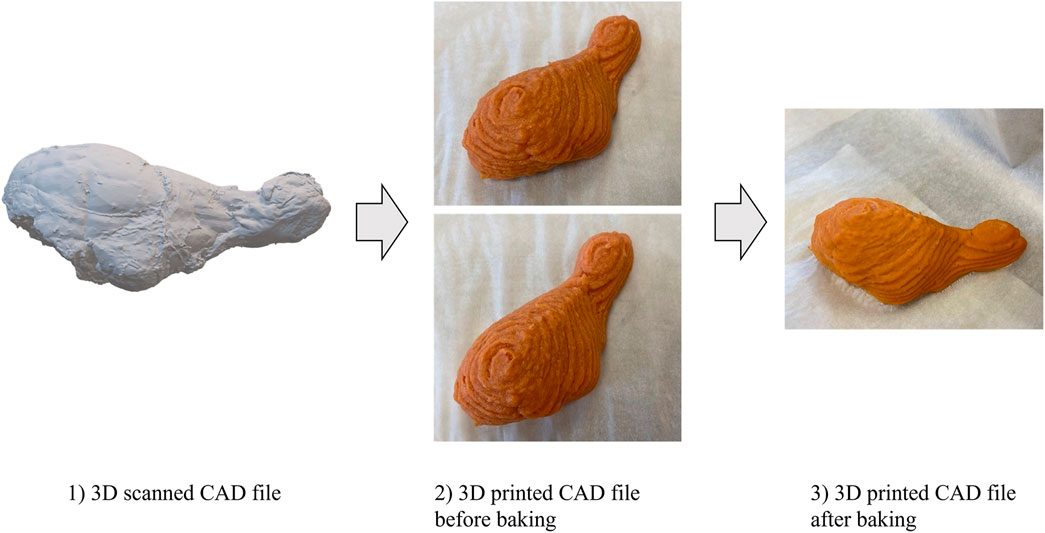
<p>By scanning a food item (such as a chicken drumstick), a 3D food printer can then be used to produce a more realistic representation than a timbale, while still retaining a safe texture for people with dysphagia.</p>
<p>Believe it or not, trials of food printing in aged care homes are currently underway in Australia, in partnership with the University of Technology Sydney. Edith Cowan University is also working to bring the technology to market for people of all ages.</p>
<p><img src="https://embrayse.com/insights/8-technology-innovations-to-improve-food-services-in-aged-care-homes/3d-food-printing.jpeg" alt="A 3D-printed food sample alongside research diagrams showing texture composition" /></p>
<p><strong>Priority areas addressed:</strong> Improved meal choice and quality; Alternative food service delivery models and innovation.</p>
<h3>2. Nutritionally enhanced foods</h3>
<p>One of the big benefits of 3D printed foods is the capability to selectively nutritionally enhance food for individual residents. This could be in the form of increasing protein content, adding select micronutrients or providing additional fibre.</p>
<p>However, there's no need to wait until 3D food printing goes mainstream to adopt this strategy.</p>
<p>Protein supplementation in foods like ice cream, smoothies and desserts is a viable and achievable option right now. Providers can choose from a variety of pre-fortified ready-made options or adjust existing recipes to include protein powder.</p>
<p>A similar approach could be taken with micronutrients and 'superfoods' supplements. However, this would likely require individual medical assessment and consultation with resident and/or family guardians before progressing.</p>
<p>Where there is no immediately indicated medical need, nutritionally enhanced foods may be provided as an additional food services strategy to make it economically viable.</p>
<p><strong>Priority areas addressed:</strong> Improved meal choice and quality; Evidence-based menu planning and assessment.</p>
<h3>3. Cooking robots</h3>
<p>While they haven't yet reached aged care, cooking robots are starting to revolutionise the restaurant industry.</p>
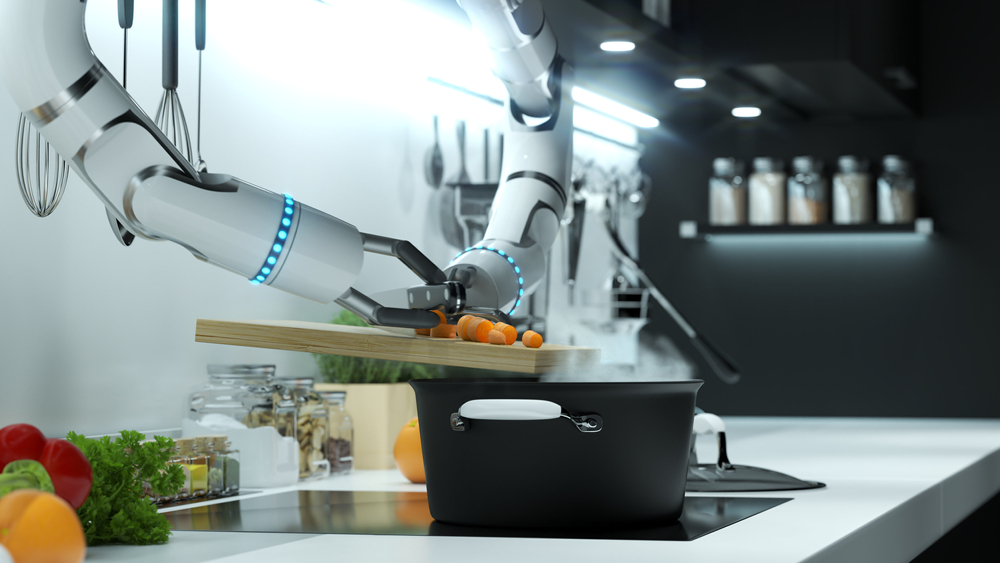
<p>From smart appliances to robot arms to fully robotic kitchens, it is now possible to purchase cooking robots to help with many of the repetitive tasks undertaken in a large kitchen (such as chopping, stirring and turning). They also can play a role in quality control, similar to the DOM Pizza Checker recently implemented in Australia.</p>
<p><img src="https://embrayse.com/insights/8-technology-innovations-to-improve-food-services-in-aged-care-homes/cooking-robots.jpeg" alt="Cooking robots revolutionising the modern commercial kitchen" /></p>
<p>For aged care, cooking robots may help ease the staffing issues and financial pressures around food services. However, the high capital costs are likely to make this unfeasible for many providers.</p>
<p>Furthermore, benefits to residents would likely rely on cooking robots not simply being used as a cost-cutting exercise, with efficiencies being redistributed to other areas of food service (like enhancing dining experience). Regardless, as the technology becomes cheaper and more accessible, investments in cooking robots may prove rewarding.</p>
<p><strong>Priority areas addressed:</strong> Alternative food service delivery models and innovation.</p>
<h3>4. New cooking models</h3>
<p>Some of the challenges around meal quality in aged care settings come from applying conventional cooking models to what are essentially large scale catering operations.</p>
<p>For example, while a family-style roast beef is a wonderful way to provide a familiar, appealing and homely meal for aged care residents, the end product doesn't always match expectations. Unfortunately, cooking in large batches and then keeping meat at food safe temperatures from kitchen to plate often results in dry, overcooked meat that's both unappealing and difficult to chew and swallow.</p>
<p>Adopting hybrid food models, such as a mixed cook-chill / fresh-cook model, offers increasing flexibility for providers to expand menu options.</p>
<p>A prime example is buying sous vide cook-chilled meats. These pre-cooked and then chilled meats have great taste and texture and an extended shelf life, and can be flash grilled before serving or added to stews and stir fries, speeding up the process of cooking on premise before serving without compromising food safety or quality. Other cook-chilled products such as pastas and stews can be offered as alternative menu options for residents, with exact portions regenerated and served based on resident orders to ensure minimum food waste and maximum efficiency.</p>
<p><strong>Priority areas addressed:</strong> Improved meal choice and quality; Food delivery, timing and temperature management.</p>
<h3>5. Service robots</h3>
<p>Service robots are an example of a foodservice technology that is generally suitable for food service industries, but not so much for aged care.</p>
<p><img src="https://embrayse.com/insights/8-technology-innovations-to-improve-food-services-in-aged-care-homes/service-robots.jpeg" alt="A service robot delivering meals in a hospitality setting" /></p>
<p>Anyone who has taken young children to a restaurant with serving robots likely appreciated the squeals of delight and fascination as the robots did their thing. Yet, service robots would be unlikely to get a similar reception in an aged care setting (plus they would reduce the important human-to-human element of the dining experience).</p>
<p>However, in the interests of providing a balanced view of this technology, Sunshine Coast University Hospital has reported success with a 'hybrid model,' where robots do much of the &quot;heavy lifting&quot; involved in transporting meals. This has the benefit of freeing up staff time to spend more time delivering meals with care and attention at the point of service.</p>
<p>Like with cooking robots, the efficiencies from service robots could be used by larger providers to focus on enhancing dining experiences and other aspects of food service.</p>
<p><strong>Priority areas addressed:</strong> Food delivery, timing and temperature management; 24-hour dining and access to fluids.</p>
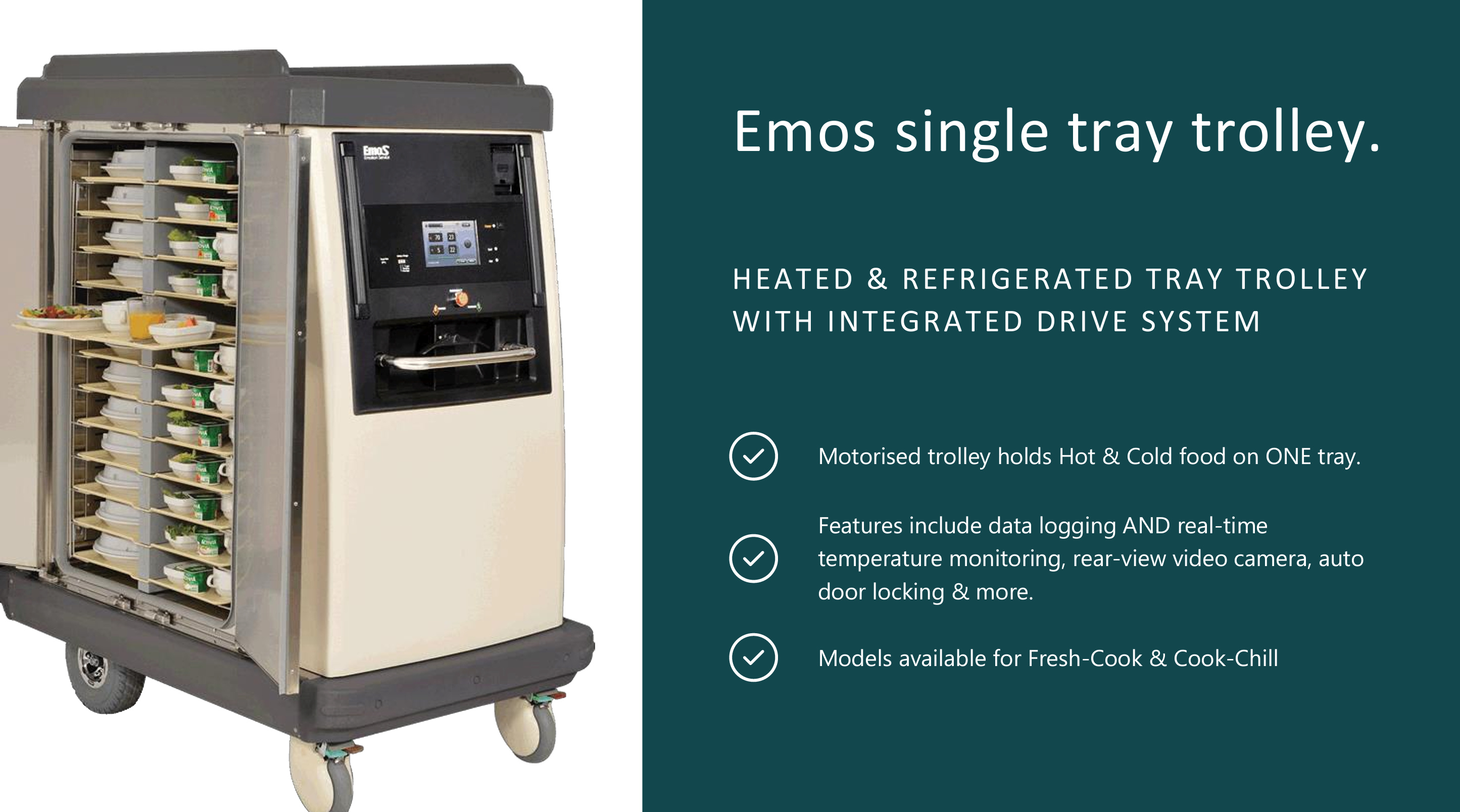
<h3>6. Hot and cold food transport units</h3>
<p>Anyone who has worked in an aged care home will be familiar with complaints that food is unappetising due to food transport issues.</p>
<p>A variety of issues can occur while meals are making their way from kitchen to plate to resident. The most common culprits caused by traditional transportation methods are:</p>
<ul>
<li>Hot meals being lukewarm or cold</li>
<li>Warm salads and desserts (from being stored next to hot food)</li>
<li>Gravies, sauces and stews/casseroles being congealed upon arrival</li>
</ul>
<p>This is one area where innovation in another industry, aviation, does have applicability to aged care services.</p>
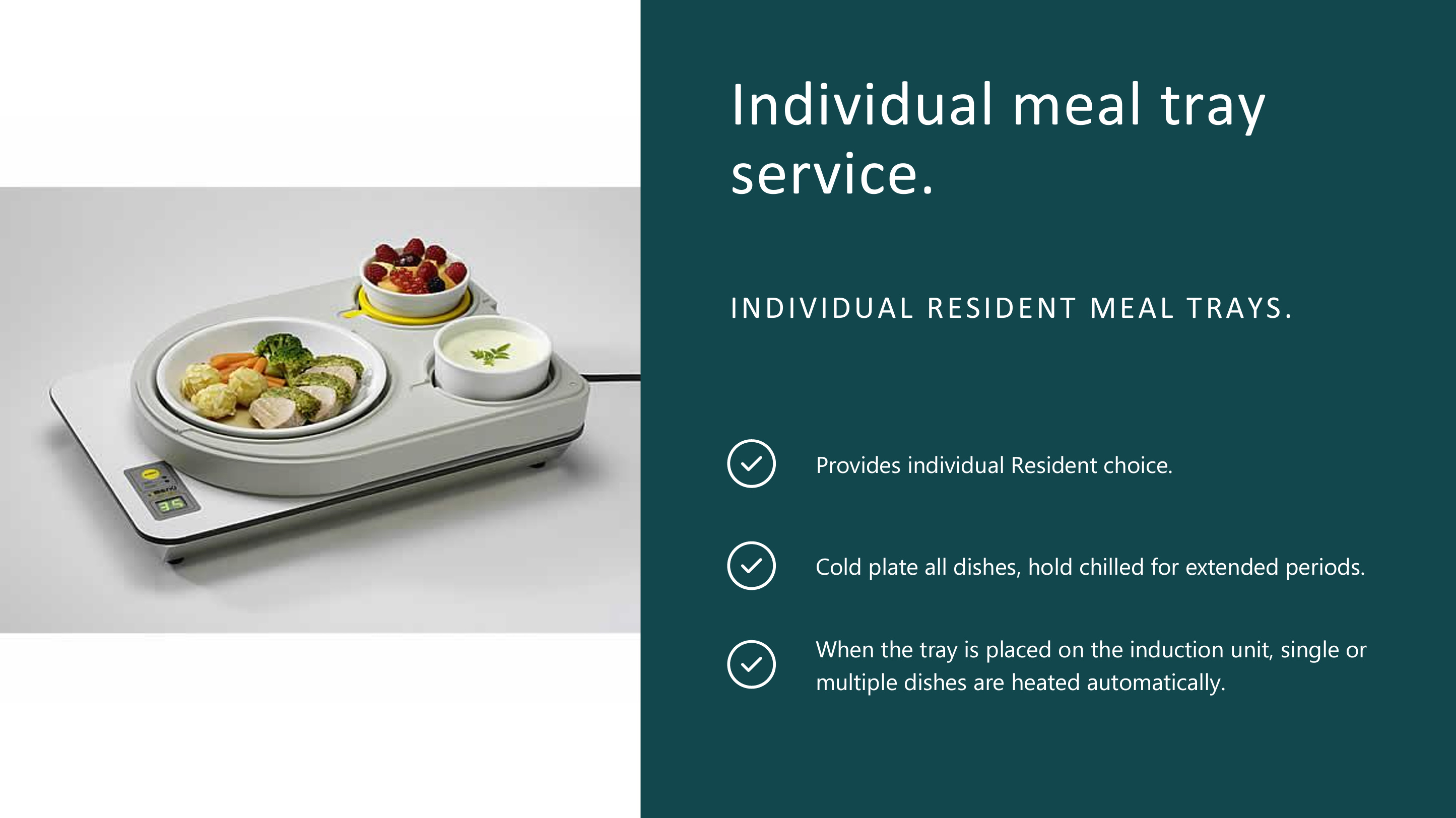
<p>For some time now, certain airlines have utilised meal trays that can be stored chilled, then selectively heat individual components to a desired temperature.</p>
<p><img src="https://embrayse.com/insights/8-technology-innovations-to-improve-food-services-in-aged-care-homes/multi-temp-tray.jpg" alt="A multi-temperature meal tray with individually heated and chilled compartments" /></p>
<p>Or, a slightly lower tech solution: a heated and refrigerated single tray trolley.</p>
<p><img src="https://embrayse.com/insights/8-technology-innovations-to-improve-food-services-in-aged-care-homes/heated-refrigerated-trolley.jpg" alt="A heated and refrigerated single tray trolley for aged care meal delivery" /></p>
<p><strong>Priority areas addressed:</strong> Improved meal choice and quality; Food delivery, timing and temperature management.</p>
<h3>7. Point of service serving options</h3>
<p>Not all food service innovations in aged care need to utilise new technology. Sometimes, using existing tools in a different manner can greatly enhance the dining experience.</p>
<p>Two relatively easy-to-implement and low cost examples of this are 'family meal' style serving options (buffet or banquet) and 'popup' or temporary food serveries.</p>
<p>A family meal model can be implemented by utilising technology like bain maries and chillers in dining areas to enable aged care residents to choose and serve their own food (with assistance from staff if required). This has been shown to improve energy intake among residents at risk of malnutrition.</p>
<p>A popup food servery is essentially a small kitchenette, where parts of a meal can be prepared and served to enhance the dining experience. An example would be baking bread with automated bread makers and cooking soup/stew in a crockpot.</p>
<p>The aroma in the dining area helps to build appetite and anticipation for the meal and provide a more homely environment. To take it up a notch, fresh herbs planted in the dining area or even a hydroponic setup for tomatoes, herbs and lettuce can create even more connection and engagement with the meal.</p>
<p><strong>Priority areas addressed:</strong> Improved meal choice and quality; Alternative food service delivery models and innovation; Support for independent food and drink consumption; Food delivery, timing and temperature management.</p>
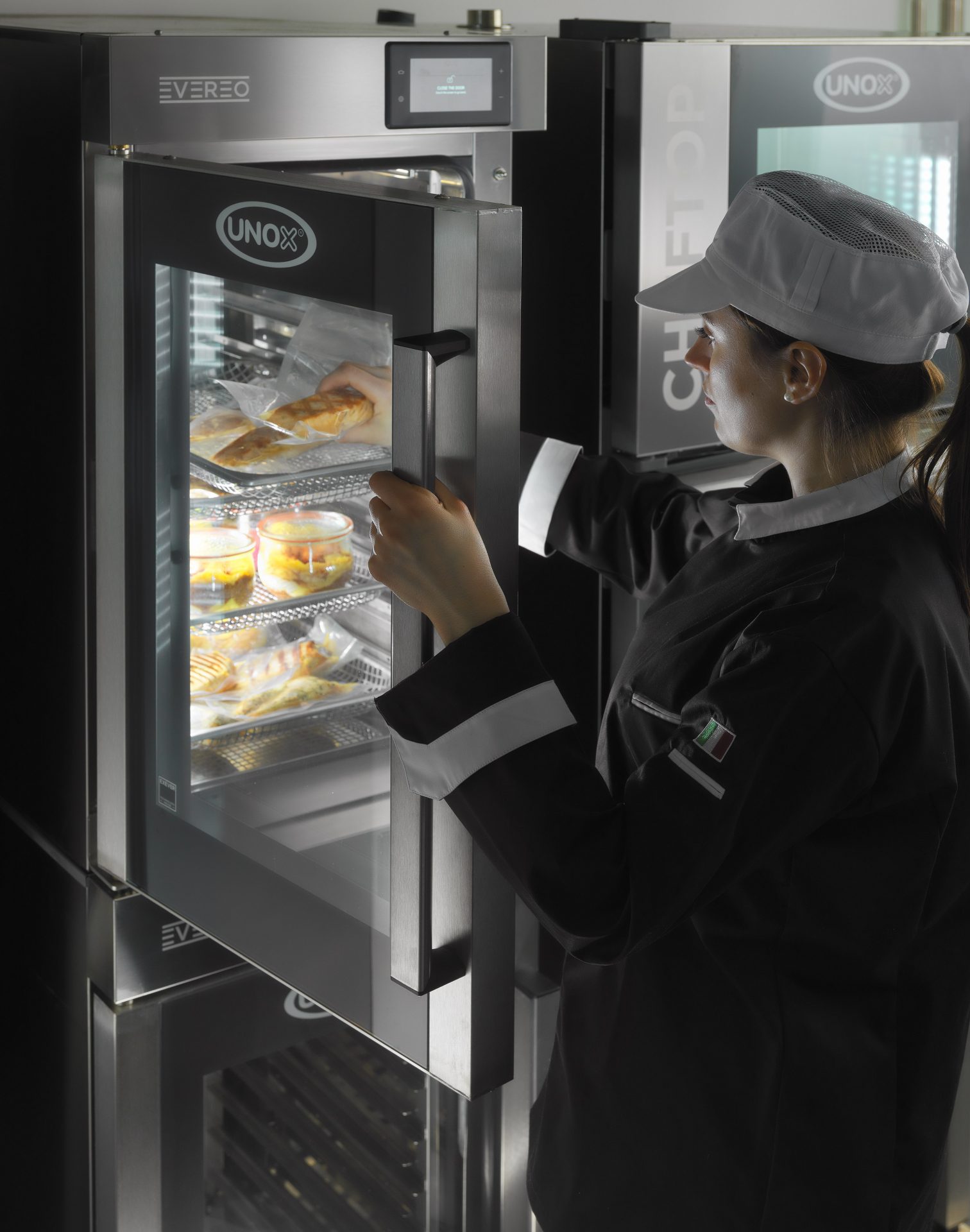
<h3>8. Hot fridge food preservers</h3>
<p>While hot and cold food transport units can overcome some of the temperature issues regarding food transport, they don't provide much additional flexibility with mealtimes.</p>
<p>Requiring all residents in an aged care home to eat lunch and dinner at the same time minimises consumer choice and independence with mealtimes. It can also increase food wastage, as all uneaten food must be discarded after a set time to comply with food safe guidelines.</p>
<p>Hot fridge food preservers, like the Evereo products, allow cooked food to be stored at service temperature for extended periods of time. Due to accurate temperature and atmospheric control, even uncovered food can be hygienically stored for up to eight hours while preserving its original taste and texture.</p>
<p><img src="https://embrayse.com/insights/8-technology-innovations-to-improve-food-services-in-aged-care-homes/unox-evereo.jpeg" alt="Unox Evereo hot fridge food preserver keeping cooked meals at service temperature" /></p>
<p>This enables providers to offer more flexibility with mealtimes where it is requested or required by residents.</p>
<p><strong>Priority areas addressed:</strong> Improved meal choice and quality; Alternative food service delivery models and innovation; Food delivery, timing and temperature management.</p>
<h2>The importance of context</h2>
<p>If there is one key takeaway from this exploration of technology to improve food services in aged care, it is that context matters, a lot.</p>
<p>Food (and health) technology will continue advancing at a rapid pace. So much so that dining at a restaurant, cooking dinner at home, receiving a meal in a hospital and eating on a plane will likely look very different 10 years on than they do now.</p>
<p>While there will undoubtedly be innovations from these areas that have great carryover to aged care homes, many won't.</p>
<p>When it comes to food technology, the role of leaders in aged care will always be to evaluate the options on offer and decide which could be beneficial in the specific aged care context.</p>
<p>Running parallel to all current and future food technology innovations is catering software.</p>
<p>Regardless of how food is cooked and delivered, providers will always need to capture resident dietary profiles, plan menus, allow staff and residents to order, collect feedback and more.</p>
]]></content>
  </entry>
  
  
  <entry>
    <title>How Food &amp; Nutrition Can Improve Dementia Outcomes</title>
    <link href="https://embrayse.com/insights/how-food-nutrition-can-improve-dementia-outcomes/"/>
    <updated>2023-10-06T00:00:00Z</updated>
    <id>https://embrayse.com/insights/how-food-nutrition-can-improve-dementia-outcomes/</id>
    <summary>An overview for aged care providers, including practical tips you can implement now.</summary>
    <content type="html"><![CDATA[<p>Considering <a href="https://www.health.gov.au/news/announcements/dementia-in-australia-2021-report-released#:~:text=Up%20to%20472%2C000%20Australians%20are,for%20a%20person%20with%20dementia.">more than half of people</a> in residential aged care in Australia live with dementia, it's essential that care providers utilise evidence-based strategies to improve the lives of people impacted by this debilitating condition.</p>
<p>And while managing issues around memory and behaviour often get the most attention, food and nutrition are equally important considerations in providing high-quality care for people with dementia.</p>
<p>In this article we'll unpack the major points about the interactions between food, nutrition and dementia. We'll also explain how, in an aged care setting, implementing creative solutions to enhance choice in meals and improve dining experience can result in better outcomes for people living with dementia.</p>
<h2>Links between nutrition and dementia onset</h2>
<p>Good dietary habits are important for the overall health of all people in residential aged care homes. But when it comes to dementia, there are some important links between disease onset, progression and management that must be considered.</p>
<p>While research is still ongoing, there is a <a href="https://www.bmj.com/content/369/bmj.m2269">growing body of evidence</a> to suggest that good dietary habits can:</p>
<ul>
<li>Reduce overall risk of dementia</li>
<li>Delay disease onset</li>
<li>Support healthy cognitive ageing</li>
</ul>
<p>We can't conclusively say yet that one specific dietary approach is superior to others. However, regarding prevention of early onset dementia, Mediterranean-type diets (in particular the Mediterranean-DASH Intervention for Neurodegenerative Delay, or MIND, diet) seem to <a href="https://www.mdpi.com/2072-6643/12/12/3682">show the most promise</a>.</p>
<p>Unfortunately, just as good habits can reduce the risk of dementia, suboptimal nutritional intake can lead to worse outcomes.</p>
<h2>Nutrition risk factors for dementia</h2>
<p>The biggest dietary risk factor involved in dementia management is malnutrition.</p>
<p>Research demonstrates that <a href="https://www.ncbi.nlm.nih.gov/pmc/articles/PMC6723872/#:~:text=A%20few%20studies%20recently%20reported,MCI%20to%20dementia%20%5B8%5D.">malnutrition can both</a>:</p>
<ul>
<li>Hasten the progression of mild cognitive impairment to dementia</li>
<li>Increase the severity of behavioural and psychological symptoms of dementia</li>
</ul>
<p>Considering the high prevalence of mild cognitive impairment and dementia in residential homes, it's clearly a priority to ensure adequate nutrition for aged care residents. Highlighting the importance of this issue, the 2021 <a href="https://agedcare.royalcommission.gov.au/sites/default/files/2021-03/final-report-volume-1.pdf">Royal Commission into Aged Care Quality and Safety</a> identified food and nutrition as an area requiring priority attention.</p>
<p>However, as any experienced care provider knows, <strong>supporting people with dementia to maintain an adequate diet isn't easy</strong>.</p>
<h2>Challenges with dementia and food intake</h2>
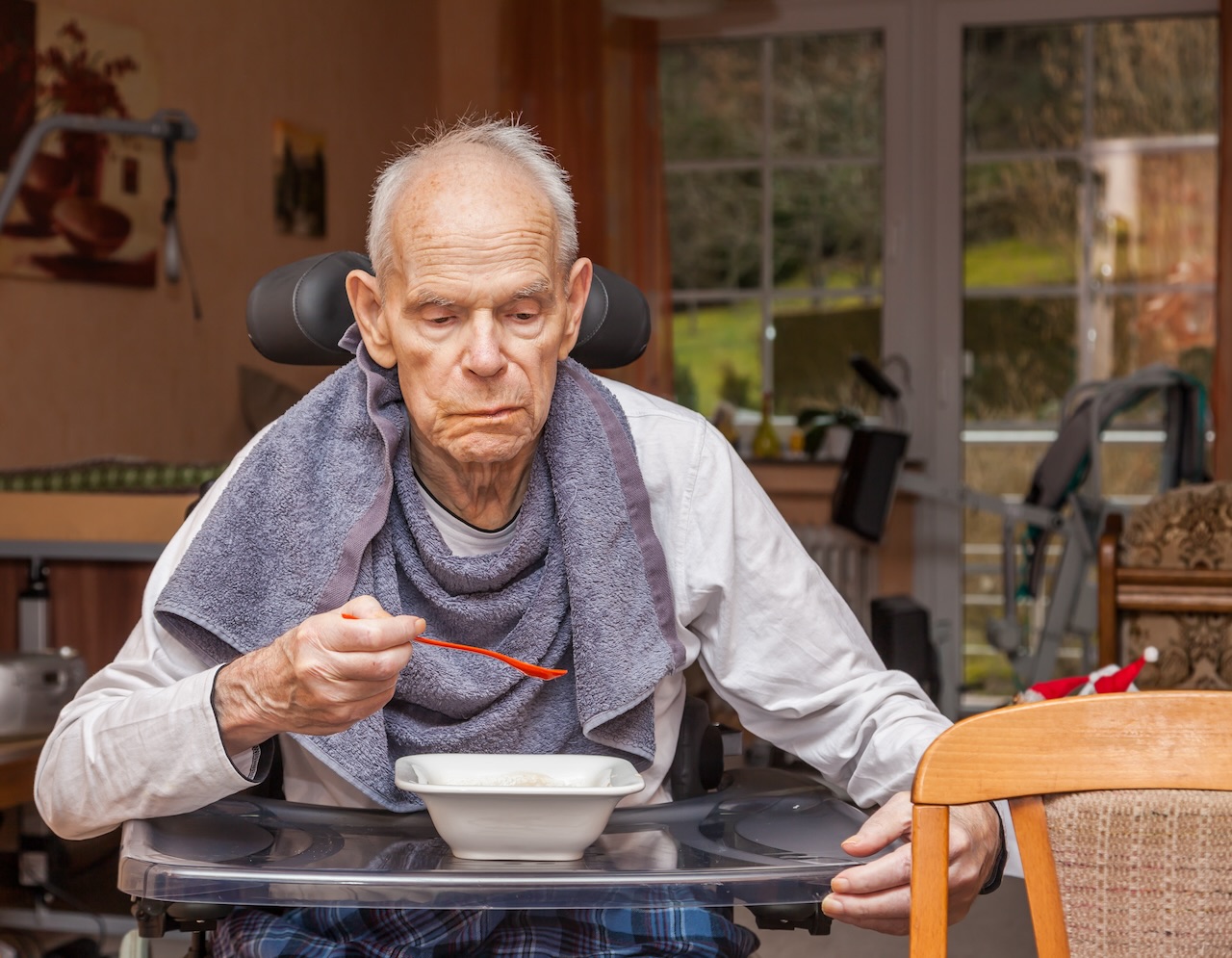
<p><img src="https://embrayse.com/insights/how-food-nutrition-can-improve-dementia-outcomes/dining-with-dementia.jpg" alt="An older person being supported with a meal in an aged care dining room" /></p>
<p>From changes to food preferences to difficulty participating in meal times, dementia and cognitive impairment can result in a range of obstacles to adequate dietary intake.</p>
<p>When not addressed, these challenges can result in a &quot;<a href="https://link.springer.com/article/10.1007/s12603-021-1616-4">vicious cycle</a>,&quot; where memory impairment impacts nutritional status, which in turn results in progressively worse cognition.</p>
<p>In fact, some <a href="https://www.ncbi.nlm.nih.gov/pmc/articles/PMC6345543/">studies have found</a> that compared to well-nourished people with dementia, malnourished people had four times the risk of experiencing &quot;severe dementia&quot; and a threefold higher risk of death (mainly due to complications from frailty).</p>
<p>Some of the <a href="https://www.dementia.org.au/information/about-you/i-am-a-carer-family-member-or-friend/personal-care/eating">main challenges</a> of maintaining adequate nutrition for people with dementia include:</p>
<ul>
<li><strong>Loss of appetite.</strong> Factors such as reduced physical activity, forgetfulness, decreased enjoyment in food and general apathy can result in people with dementia experiencing a loss of appetite. Without input, this is an issue that usually becomes progressively worse.</li>
<li><strong>Changes in taste.</strong> People with dementia can experience substantial changes in taste. This can result in being uninterested in previous favourite meals and a change in overall food preferences. Cravings for overly sweet, sour or salty foods are quite common.</li>
<li><strong>Chewing and swallowing issues.</strong> Where cognition makes it difficult for a person to recognise mouth discomfort (whether from a dry mouth or poor dentition), they may inadvertently lose interest in food. In some cases, dementia may also impact motor functions related to eating, like chewing and swallowing.</li>
<li><strong>Difficulty with meal times.</strong> Becoming confused and overwhelmed at meal times is a common challenge for people with dementia. Some dementia sufferers may forget what cutlery and crockery are for, or find it hard to concentrate for long enough to consume an adequate meal.</li>
</ul>
<h2>Scope of the problem in Australia</h2>
<p>Unfortunately, despite increasing knowledge about the challenges around dementia and nutrition, the <a href="https://dietitiansaustralia.org.au/sites/default/files/2021-12/202012-PositionStatement-Malnutrition_in_Aged_Care.pdf">prevalence of malnutrition</a> in Australian residential aged care settings has been identified as ranging from 22% to 50%.</p>
<p>In recognition of the need for increased funding and support for this issue, the Albanese Government recently announced $12.9 million to establish a <a href="https://www.health.gov.au/ministers/the-hon-anika-wells-mp/media/lifting-the-standard-of-food-and-nutrition-in-aged-care?language=en">food unit</a> in the Aged Care Quality and Safety Commission.</p>
<p>Amongst other things, this unit will administer a hotline providers can call for advice, linkage to education programs and a commitment to &quot;engage Dementia Australia experts to promote nutrition and food enjoyment for people with dementia.&quot;</p>
<h2>Creative strategies for care providers</h2>
<p>While funding for residential aged care food budgets obviously still remains an issue, the spotlight on aged care food services has made it much easier to access high-quality information on improving nutrition for people with dementia.</p>
<p>A full overview of the topic can be found in a <a href="https://www.agedcarequality.gov.au/providers/quality-care-resources/residential-aged-care-food-services-discussion-paper">discussion paper</a> on the ACQSC website. And the associated <a href="https://www.agedcarequality.gov.au/providers/quality-care-resources/why-do-meals-matter#what-factors-affect-the-dining-experience-within-aged-care-services?">Why do meals matter?</a> page describes proven interventions to improve the nutritional intake in aged care residents.</p>
<p>We have summarised some of the key points below, along with general tips for enhancing mealtime experiences for people with dementia.</p>
<h3>Person-centred mealtime care</h3>
<p>There are obviously limitations on just how personalised each resident's mealtimes can be. But overall, more person-centred, enabling and social approaches to mealtimes improve nutritional outcomes for people with dementia.</p>
<p>This might involve things like:</p>
<ul>
<li>Using a multidisciplinary approach to developing individual mealtime plans for at-risk residents</li>
<li>Providing easy-to-use cutlery or crockery to residents who require it (along with finger food if needed)</li>
<li>Catering to preferences for sweet, high-carbohydrate tastes where interest in standard meals is reduced</li>
</ul>
<h3>Improving food choice and independence</h3>
<p>A clear pattern in the evidence is that interventions which increase choice and decision making at mealtimes improve nutritional intake.</p>
<p>Proven strategies include:</p>
<ul>
<li>Buffet style dining programs, where residents can choose their meals independently</li>
<li>Providing finger foods at and between meals for people with dementia</li>
<li>Facilitating food combination requests by residents, even if they might seem unusual</li>
</ul>
<h3>Enhancing the dining environment</h3>
<figure>
  <img src="https://embrayse.com/insights/how-food-nutrition-can-improve-dementia-outcomes/enabling-dining-environment.jpg" alt="A dementia-friendly dining environment with clear contrast, simple table settings and good lighting" />
  <figcaption>Image courtesy of Alzheimer's WA, Enabling Environments.</figcaption>
</figure>
<p>Depending on the needs of residents, several adjustments to the dining area can enhance the experience for people with dementia.</p>
<p>Examples include:</p>
<ul>
<li>Providing better lighting and colour contrast in the dining room, so residents are better able to see and focus on their food</li>
<li>Removing any clutter and unnecessary items from the dining table to minimise confusion</li>
<li>A &quot;family style&quot; approach, where residents are given serving bowls and plates and invited to participate in mealtimes</li>
</ul>
<h2>Flexible meal delivery and availability</h2>
<p>Providing flexible options for receiving meals and extended access to snacks can improve dietary intake.</p>
<p>Approaches could involve:</p>
<ul>
<li>Giving the option of room service for suitable residents</li>
<li>Decentralised bulk portioning systems, where food is portioned at the point of service in each meal area</li>
<li>24/7 availability of snacks and fluids</li>
</ul>
<h2>One small change at a time</h2>
<p>It's acknowledged that for many residential aged care providers, some of the changes suggested above could pose significant implementation challenges.</p>
<p>Whether it's budget limitations, staffing difficulties, regulatory obstacles or competing priorities, timelines for change can be impacted by a range of important factors.</p>
<p>However, considering the prevalence of dementia and the impact food and nutrition can have on outcomes, it's important to view this challenge through a lens of continual improvement. Adopt one small change at a time.</p>
<p>If you would like support with aged care food and nutrition, Embrayse provides smart catering software to empower teams to implement evidence-based nutritional strategies.</p>
]]></content>
  </entry>
  
</feed>